Share It On:
 Market leaders are silently pivoting to creator-led models to bypass ad-fatigue. Master the mechanics of influencer marketing and adapt to the influencer marketing strategies to drive measurable growth.
High-level decision-makers are realizing that the old playbook of repetitive banner ads and intrusive pop-ups is failing. Consumers are following new trends in digital marketing and have developed a psychological immunity to corporate shouting. In its place, a more nuanced, creator-centric model has emerged. This new landscape prioritizes the integrity of the messenger over the volume of the message.
In an era of rapid regulatory shifts and patient-centric demand, the reliance on third-party verification is non-negotiable. Traditional advertising is yielding to influencer-led narratives because these creators provide a layer of contextual relevance that brand-owned channels simply cannot replicate. We are moving away from broad-spectrum awareness toward hyper-targeted, community-driven engagement. This editorial breaks down the architectural requirements for a successful influencer program that drives measurable growth.
What is Influencer Marketing?
To define influencer marketing in a way that serves a high-growth tech enterprise, we must view it as a tactical overlap of high-level PR and performance-driven content creation. It is the process of building strategic alliances with individuals who have already done the hard work of earning a specific audience’s attention. These creators act as a human filter for your product, translating technical specifications into a narrative that resonates with the practical needs of their community.
The influencer marketing meaning has matured beyond the superficial social post. In 2026, it represents a deep alignment where the creator provides the cultural or professional context while the brand provides the utility. This creates a synergy where the promotional content feels entirely native to the platform and inherently valuable to the viewer. By stripping away the layer of corporate polish, you access a distribution model that leverages existing niche communities to remove friction from the sales process.
What is Influencer Marketing in Digital Marketing?
The role of this discipline within the broader digital marketing stack has evolved from an experimental line item to a core pillar of user acquisition. It functions as the bridge between cold outreach and warm conversion. When we analyze what influencer marketing is in digital marketing today, we see it as a multi-funnel tool.
It addresses the top of the funnel by generating high-quality awareness. Simultaneously, it works at the bottom of the funnel by providing the final nudge of social validation required to close a deal. In 2026, the integration of creator content into paid social funnels has become standard practice for high-growth tech firms. This synergy allows brands to scale the authenticity of a creator with the precision of programmatic targeting.
Also Read: Influencer Marketing For Apps
How Does Influencer Marketing Work?
The operational mechanics of these partnerships require a technical understanding of the creator ecosystem. It is a workflow-intensive process that demands clear communication and data-driven selection.
The Workflow Ecosystem:
- Discovery: Utilizing AI-driven platforms to identify creators whose audience demographics align with the brand’s Ideal Customer Profile (ICP).
- Vetting: Analyzing engagement rates, sentiment analysis, and historical performance to ensure the influencer’s reach is legitimate and not inflated by bot activity.
- Briefing: Providing a strategic framework that outlines brand guardrails while allowing the creator the creative freedom to speak to their audience authentically.
- Activation: The deployment of content across selected channels.
- Measurement: Tracking performance via UTM parameters, custom discount codes, and pixel-based attribution.
Building a High-Performance Influencer Marketing Strategy
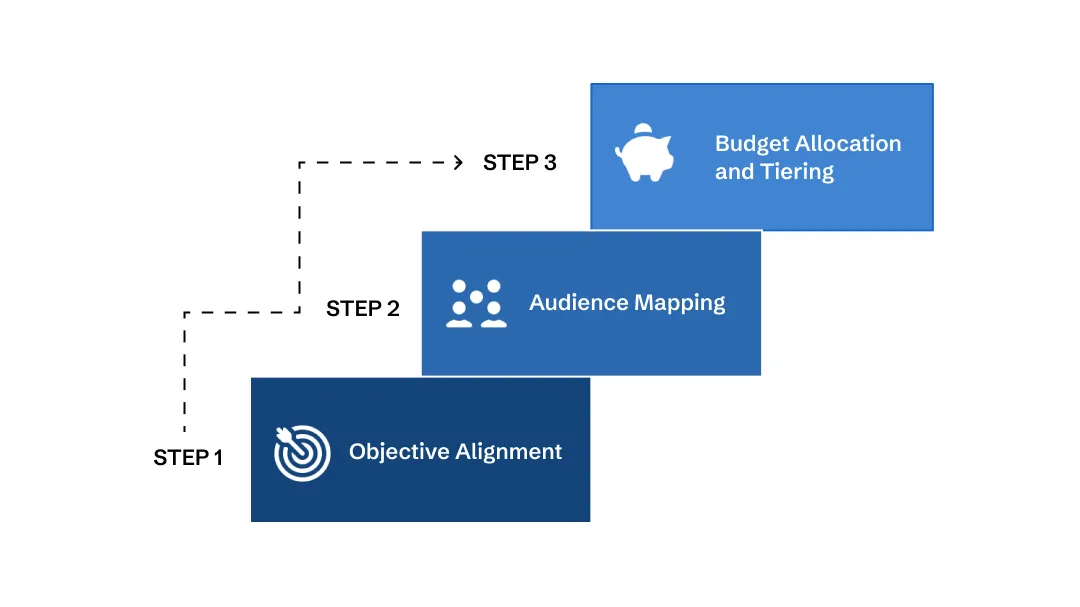
A durable influencer marketing strategy is not a series of disconnected posts. It is a long-term commitment to community engagement. You must approach this with a framework that emphasizes scalability and measurable impact over surface-level metrics.
Step 1: Objective Alignment
Before reaching out to a single creator, you must define what success looks like. Is it raw user acquisition, brand sentiment improvement, or high-value lead generation?
Step 2: Audience Mapping
You need to understand where your potential users spend their time. For a fintech app, this might be YouTube finance channels. For a productivity tool, it might be productivity-focused newsletters and Twitter threads.
Step 3: Budget Allocation and Tiering
A balanced influencer marketing strategy often utilizes a mix of tiers:
- Macro and Mega-influencers (100K+): For professional authority, category leadership, mass awareness and broad reach.
- Micro-influencers (10K to 100K): For high engagement and niche-specific conversions.
- Nano-influencers (1K to 10K): For hyper-local or hyper-niche community building.
The Nuances of Instagram Influencer Marketing
When you execute Instagram influencer marketing, you have to respect the platform’s technical evolution. Most CMOs miss the mark by treating it like a static gallery. Success in 2026 depends on understanding how the Instagram algorithm works, which currently prioritizes reels that drive high watch time and Stories that encourage direct interaction.
To win on this platform, your strategy must include:
- Reels for Organic Discovery: Using short, high-impact video to break into new user feeds.
- Collab Posts: Using joint authorship to merge your brand audience with the creator’s community instantly.
- Direct-Action Stories: Implementing interactive elements to learn how to get likes on Instagram and, more importantly, how to drive high-intent traffic to your app store page.
How Influencer Marketing Helps Brands Scale?
The most compelling reason why influencer marketing helps brands scale is the radical reduction of the sales cycle. In a standard funnel, you spend months trying to prove your company is reliable. In a creator-led model, you bypass that phase entirely. The influencer has already spent years building the trust you need. When they endorse your tool, that trust is instantly transferred to you.
Scaling also comes from the secondary value of the content. One partnership can generate a library of high-quality, high-converting assets that your internal team can use across newsletters, website banners, and sales decks. This efficiency is why the data from Mordor Intelligence projects that the influencer marketing market will hit 40.51 billion dollars by the end of 2026 and reach a growing value of 152.26 billion dollars by 2031. This isn't just about spending more. It is about the fact that these campaigns deliver a far higher ROI than traditional display media.
Furthermore, influencer advertising acts as a powerful signal for search engines. When authoritative creators link back to your property or mention your brand in high-engagement threads, it boosts your organic visibility. This creates a compounding effect where your paid efforts directly feed your long-term organic growth.
High-Impact Marketing Channels for Content Distribution
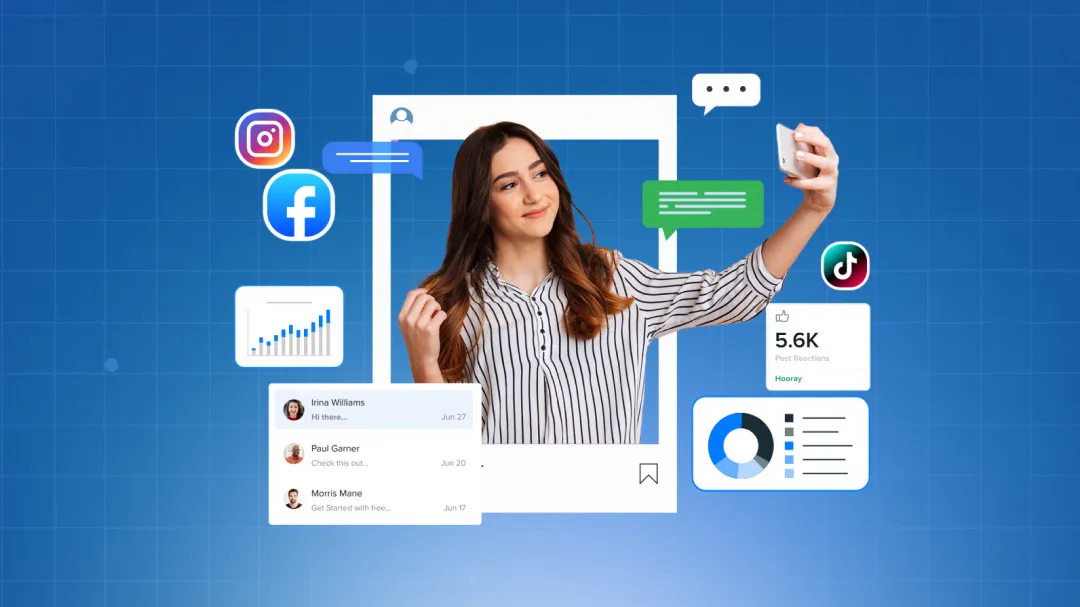
You cannot take a one-size-fits-all approach to distribution. Each platform has a different technical requirement and a different psychological state for the user. Let’s explore what each platform has to offer when it comes to influencer marketing:
Instagram Influencer Marketing: Dominating Visual Narratives
This remains the gold standard for visual storytelling. The platform’s advanced commerce features allow for a seamless transition from discovery to purchase. For mobile apps, this is often the highest-performing channel due to the native integration of app store links within the creator’s bio and stories.
LinkedIn and Twitter: The Rise of the B2B Thought Leader
For the development and tech sector, LinkedIn is the primary battleground. This is where professional social media marketing strategies are tested. Influencers here are usually practitioners whose daily work involves using the types of tools you are selling. Their endorsement is not just a commercial. It is a peer review.
YouTube and TikTok: Harnessing Long-form and Short-form Video Authority
YouTube is where your deep-dive technical content lives. It is the second-largest search engine in the world and perfect for tutorials or product comparisons. TikTok, meanwhile, is the greatest discovery engine ever built. Its algorithm allows even a new brand to reach millions of people if the content matches the raw, fast-paced energy of the platform.
Future Outlook: AI and the Creator Economy
As we look toward the next 24 months, the landscape is shifting again. The rise of virtual influencers and AI-driven discovery platforms is making the process more efficient and data-heavy.
Brands are now experimenting with AI-generated personas. These virtual influencers offer total control over brand safety and 24/7 availability. While they lack the human touch, they are becoming highly effective for technical demonstrations and futuristic brand positioning.
We are also seeing the professionalization of the industry through AI-driven discovery and vetting. We no longer have to guess if an influencer’s audience is real. Advanced machine learning models can now detect bot engagement and predict the potential ROI of a partnership with incredible precision. This allows for a shift from one-off campaigns to always-on advocacy programs.
The future of influencer marketing is not about the occasional viral post. It is about integrating creators into the very fabric of your brand’s narrative. For tech-forward companies, this is the only way to maintain a competitive edge. The creator economy is maturing into a performance-driven infrastructure that rewards transparency and authenticity above all else.
Frequently Asked Questions
What is influencer marketing in digital marketing stacks today?
It is the essential trust-building layer. It bridges the gap between raw traffic and conversions by providing the peer-led validation that is missing.
How does influencer marketing work for scaling mobile apps?
Creators demonstrate software within real-world workflows. This social proof reduces download hesitation, transforming a creator’s endorsement into a high-converting acquisition channel.
What is the modern influencer marketing meaning for CMOs?
The influencer marketing meaning has shifted from broadcasting to advocacy. It represents a strategic alignment where the brand provides the utility and the creator provides the necessary professional context.
What is the most technical influencer marketing definition?
A precise influencer marketing definition is a distribution model using independent authorities to promote products via authentic storytelling. It prioritizes audience alignment and engagement quality over simple reach or celebrity.
Why is social influencer marketing the primary growth driver?
It works because professionals prioritize peer reviews over whitepapers. Influencers provide this human-centric proof at scale, making them the most effective vehicle for building enterprise-level authority.

Uncover executable insights, extensive research, and expert opinions in one place.
Related Content